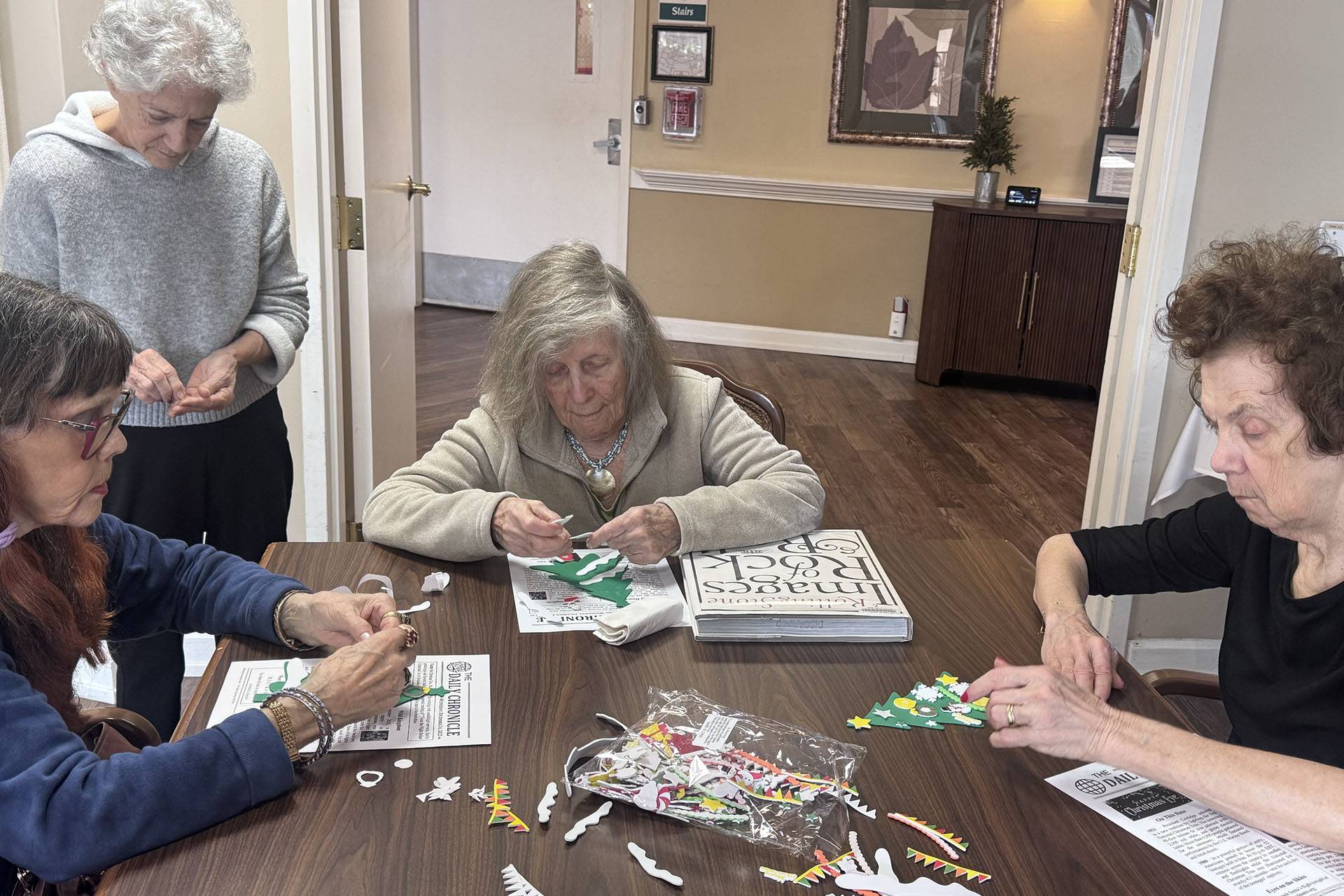
Guided Art and Craft Sessions
Overview: Guided Art & Craft Sessions
The communication barrier frequently leads to intense frustration, anxiety, and a devastating withdrawal from social interaction.
However, the human drive to create, to connect, and to express emotion does not fade away with the loss of vocabulary. At WindChime of Marin, an exclusive memory care community set against the inspiring, natural beauty of Kentfield, California, we understand that when one door of communication closes, we must open another. Within our overarching amenity category of Arts, Culture & Creative Expression, our Guided Art & Craft Sessions serve as that vital new doorway.
Far from being simple ways to pass the time, our creative programs are evidence-based therapeutic interventions. They provide our residents with a vibrant, non-verbal vocabulary, allowing them to process emotions, maintain fine motor skills, and experience profound joy and accomplishment.
The Philosophy of Failure-Free Creation
The core tenet of our Arts, Culture & Creative Expression programming is the concept of "failure-free" participation. For a person navigating cognitive decline, the world is often full of "mistakes," forgotten names, misplaced items, or misunderstood directions. These constant corrections chip away at their self-esteem.
Our Guided Art & Craft Sessions are intentionally designed to be the exact opposite. There is no right or wrong way to paint a sunset, mold a piece of clay, or sing a song. Our Life Enrichment coordinators focus entirely on the joy of the process rather than the perfection of the final product. We provide the materials, the inspiration, and the gentle guidance, allowing the resident to take the lead. This empowering environment builds confidence and encourages residents who might otherwise isolate themselves to actively participate in community life.
Featured Amenities within Creative Expression
Our creative programming is diverse, engaging different regions of the brain and catering to the unique histories and preferences of our Marin County residents.
Hands-On Creative Workshops
Physical creation provides immense therapeutic value. The act of making something tangible satisfies the innate human desire for productivity.
- Sensory Engagement: Our Hands-On Creative Workshops utilize a wide variety of tactile materials. Residents might work with smooth watercolors, textured yarns, or cool, pliable modeling clay. This sensory stimulation is vital for keeping the dementia brain engaged and alert.
- Preserving Motor Skills: The physical acts involved in our craft sessions—such as holding a paintbrush, threading large beads, or cutting paper—serve as gentle physical therapy. These repetitive, focused movements help preserve fine motor dexterity, hand-eye coordination, and joint mobility, which often decline with age and neurological disease.
- The Joy of Accomplishment: When a resident completes a craft, whether it is a painted birdhouse for our secure courtyard or a colorful collage, they experience a surge of pride. We proudly display resident artwork throughout the Windchime community, reinforcing their sense of worth and belonging.
Storytelling & Reminiscence Activities
Dementia typically damages short-term memory first, while long-term memories, the foundational stories of a person's life, often remain surprisingly intact.
- Bridging the Past and Present: Our Storytelling & Reminiscence Activities are designed to tap into these preserved memories. Facilitators use props, vintage photographs, or historical prompts (like discussing the construction of the Golden Gate Bridge or life in the Bay Area decades ago) to spark conversation.
- Emotional Validation: When a resident shares a story from their youth, they reclaim their identity. Even if the details are slightly blurred, the emotions attached to the story are real. Our caregivers validate these stories, providing a profound sense of emotional relief and connection. These sessions often generate the most laughter and animated conversation within our community.
Music Therapy & Sing-Along Programs
Music is widely recognized as one of the most powerful therapeutic tools in memory care. The areas of the brain that process musical rhythm and melody are often the very last to be affected by Alzheimer's disease.
- Unlocking Language: It is a common, beautiful phenomenon in memory care to see a resident who has lost the ability to speak in full sentences suddenly sing every word to a familiar song from their youth perfectly.
- Elevating Mood: Our Music Therapy & Sing-Along Programs are vibrant, high-energy events. We bring in local Marin County musicians and utilize personalized playlists. Listening to familiar music releases dopamine and endorphins, rapidly elevating mood and significantly reducing anxiety and agitation.
- Rhythmic Movement: These sessions naturally encourage physical movement. Residents clap their hands, tap their toes, and often dance, providing spontaneous, joyful cardiovascular exercise in a safe, supported environment.
The Canvas of Community
Perhaps the greatest benefit of our Guided Art & Craft Sessions is the sense of community they foster. Art breaks down the barriers of dementia. When residents gather around a table with paint and canvas, or sit in a circle singing old standards, they are not patients managing a disease; they are artists, storytellers, and friends sharing an experience.
By prioritizing Arts, Culture & Creative Expression, WindChime of Marin ensures that our residents continue to communicate, continue to create, and continue to live lives filled with vibrant color and joyful song.
Frequently Asked Questions (FAQs)
What does "failure-free" mean in the context of art therapy?
"Failure-free" means the activities are designed with no right or wrong outcome. The focus is entirely on the joy of the creative process, sensory engagement, and emotional expression. This eliminates the frustration and anxiety often associated with tasks that require perfection or complex instructions.
My loved one has never been artistic. Will they enjoy these sessions?
Absolutely. You do not need to be a former artist to benefit from creative expression. Our programs are designed to be accessible to all skill levels. Even simple acts like mixing colors or listening to music provide profound sensory and emotional benefits.
How does music therapy help someone who can no longer speak?
The parts of the brain that process music and rhythm often remain undamaged long after the language centers decline. Familiar music can bypass the damaged areas, often allowing a resident who cannot speak conversationally to sing along, providing an incredible emotional release and a moment of deep connection.
Can family members participate in the art and music sessions?
Yes! We strongly encourage families to join us. Sharing a Sing-Along Program or working on a craft project together is a beautiful, stress-free way to connect and create new, joyful memories with your loved one.
How do hands-on crafts help with physical health?
Activities like painting, molding clay, or threading beads require repetitive hand movements. This acts as gentle physical therapy, helping to maintain fine motor skills, hand-eye coordination, and joint flexibility.
Where is the WindChime of Marin community located?
Our secure, boutique memory care community is nestled in the serene and picturesque town of Kentfield, in Marin County, California.
How do you choose the topics for Reminiscence Activities?
We use the "Life Story" assessments completed by families upon move-in. By knowing where our residents grew up, their past careers, and their hobbies, our facilitators can tailor storytelling prompts—such as vintage photos of San Francisco or old sports memorabilia—that are most likely to spark joy and recognition.
Citations:
- Alzheimer's Association: Art and Music Therapy for Dementia
- National Institute on Aging (NIA): Cognitive Health and Older Adults: Activities and Engagement