
Cognitive Stimulation Activities
Overview: Cognitive Stimulation Activities
At Windchime of Marin, our Cognitive Health & Memory Support programming is anchored by dynamic Cognitive Stimulation Activities that keep the mind engaged, active, and joyful. By heavily incorporating Sensory-Based Engagement—utilizing sight, sound, touch, and smell within our beautiful Kentfield community—our highly trained staff helps residents bypass cognitive barriers to unlock vivid memories, reduce anxiety, and maintain a profound sense of purpose.
Awakening the Mind: Cognitive Stimulation Activities at Windchime of Marin
When a family transitions a loved one into a memory care community, their primary concern is naturally focused on physical safety: fall prevention, medication management, and secure perimeters. However, once that baseline of physical safety is established, a critical question emerges: What will my loved one do all day?
For individuals living with Alzheimer's disease or other forms of dementia, an empty, unstructured day is not relaxing; it is deeply detrimental. Boredom and under-stimulation are primary triggers for severe behavioral issues, including pacing, anxiety, and depression. To truly thrive, the brain requires constant, meaningful engagement.
At Windchime of Marin, a boutique memory care community nestled in the serene landscape of Kentfield, California, we reject the notion that dementia means the end of learning or engagement. Under our overarching amenity category of Cognitive Health & Memory Support, our vibrant Cognitive Stimulation Activities form the heartbeat of our daily schedule. We do not just keep our residents "busy"; we actively exercise their minds, helping to preserve neural pathways, boost self-esteem, and foster deep joy.
The Philosophy of Failure-Free Engagement
The goal of our cognitive programming is never to test a resident or highlight their deficits. For someone navigating cognitive decline, the feeling of "getting the answer wrong" can cause immense frustration and a rapid withdrawal from social situations.
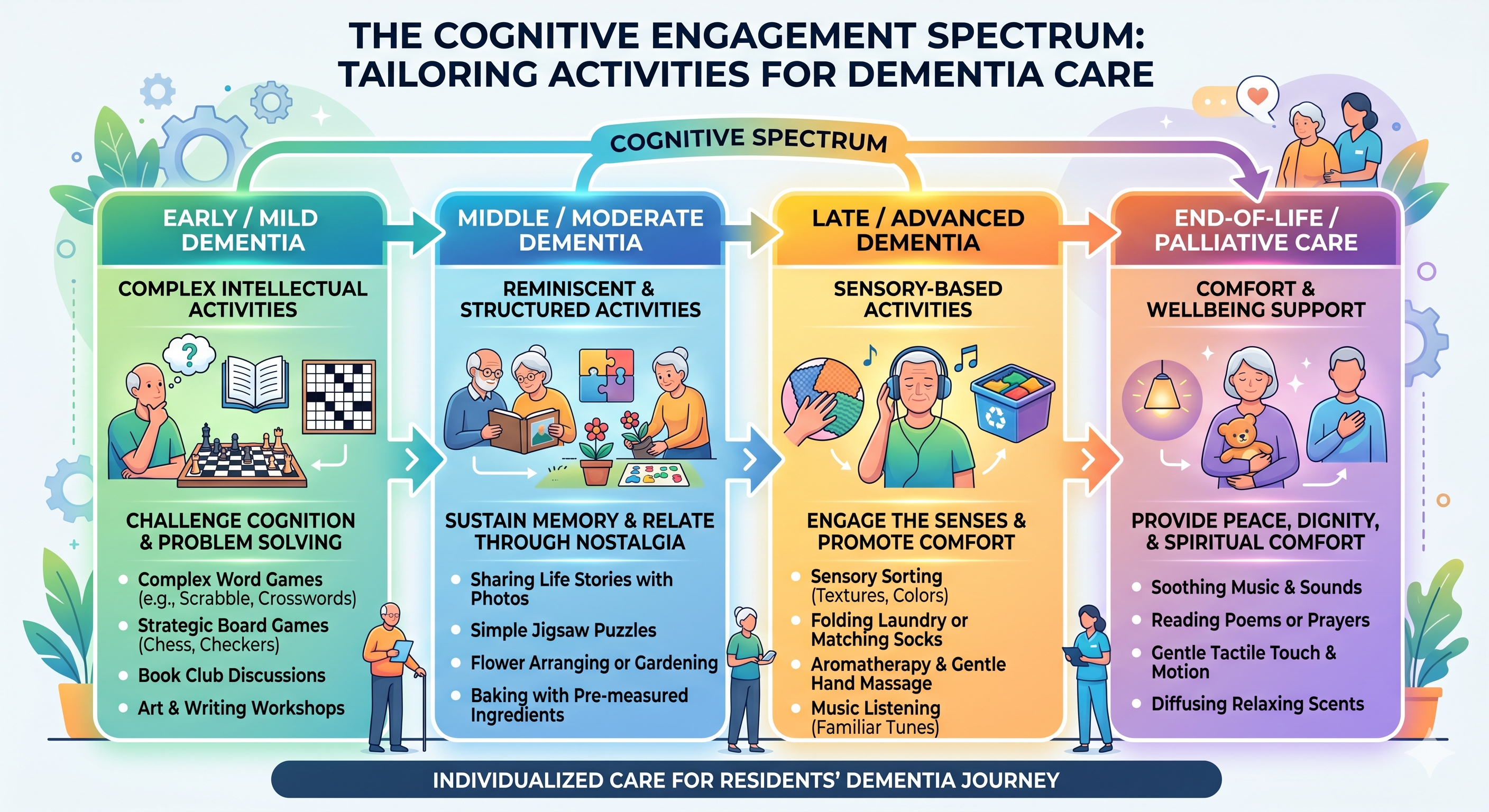
Instead, our Life Enrichment coordinators utilize a "failure-free" philosophy. Every activity is carefully scaffolded to the individual resident's current cognitive abilities. If we are doing a trivia session, the questions are tailored to their specific era and interests. If we are working on a puzzle, the piece size and complexity are chosen to ensure a successful outcome. The focus is entirely on the joy of participation and the social connection, rather than the perfection of the final result.
Featured Amenity: Sensory-Based Engagement
Perhaps the most powerful tool in our cognitive stimulation arsenal is Sensory-Based Engagement. Dementia alters how the brain processes language and abstract thought, but the brain's sensory processing centers often remain robust much later into the disease progression. By engaging the five senses—sight, sound, touch, smell, and taste—we create dynamic "anchors" that can bypass damaged neural pathways to trigger vivid memories and emotional stability.
Our Sensory-Based Engagement program includes the following core elements:
- Aromatherapy and Olfactory Stimulation: The olfactory bulb is closely connected to the brain's centers for memory and emotion. A simple scent can unlock a flood of positive memories. We regularly incorporate baking sessions where the smell of chocolate chip cookies or fresh bread permeates the common areas, stimulating appetite and prompting conversations about family recipes. We also utilize essential oils, such as lavender, during evening wind-down routines to naturally reduce "sundowning" anxiety.
- Tactile and Textural Activities: For residents who may struggle with verbal communication, keeping their hands busy provides immense cognitive comfort. We offer tactile sorting activities (like organizing smooth buttons or rough fabrics), guided clay molding, and "fidget blankets" equipped with zippers, buttons, and varying textures. These activities provide soothing sensory input and help preserve fine motor dexterity.
- Visual Engagement in Nature: We take full advantage of our stunning Marin County location. Our secure, beautifully landscaped courtyards are utilized daily for visual cognitive stimulation. Residents participate in guided nature walks, observing the vibrant colors of blooming flowers or watching the light shift over the silhouette of Mount Tamalpais. This visual engagement with nature reduces stress and helps regulate circadian rhythms.
- Auditory Anchors: Sound is profoundly stimulating. Beyond formal music therapy, we incorporate auditory engagement throughout the day. This might involve playing ambient, calming nature sounds (like ocean waves or the namesake windchimes) in the common areas, or facilitating listening stations where residents can hear historic radio broadcasts from their youth, prompting rich reminiscence discussions.
- Taste and Culinary Exploration:T Taste is a powerful cognitive trigger. Our culinary team works closely with our Life Enrichment coordinators to host tasting events. A simple "taste test" of different seasonal Marin County fruits or a nostalgic ice cream social provides an enjoyable, highly social sensory experience that encourages residents to engage and converse
The Rhythm of a Stimulating Day
A successful cognitive stimulation program relies on a predictable rhythm. At Windchime of Marin, our days are structured to maximize engagement when residents are at their sharpest, while providing soothing sensory input when they need to rest.
Mornings often feature more active, complex cognitive workouts, such as current events discussions (where we review the morning paper), word associations, or trivia based on local Bay Area history. Afternoons transition into more sensory-focused activities, such as art projects, tactile gardening in our raised courtyard beds, or music appreciation. Evenings are dedicated entirely to calming sensory engagement to prepare the mind for restorative sleep.
By deeply integrating Cognitive Stimulation Activities and Sensory-Based Engagement into our daily care, Windchime of Marin ensures that our residents do not just exist within our walls—they continue to learn, engage, and experience the world around them with vibrant clarity and profound dignity.
Frequently Asked Questions (FAQs)
What is the difference between keeping a resident "busy" and "cognitive stimulation"?
Keeping someone busy often involves repetitive, unfulfilling tasks (like staring at a television). Cognitive stimulation involves structured, purposeful activities—like solving puzzles, discussing history, or engaging in sensory crafts—that require active mental participation and are proven to preserve cognitive function and boost self-esteem.
My loved one has late-stage dementia and cannot participate in trivia. How do you engage them?
This is where Sensory-Based Engagement is vital. For residents in later stages, we shift away from language-heavy tasks and focus on sensory input. This might involve hand massages with scented lotions, listening to familiar music, or holding textured objects, which provides profound comfort and non-verbal cognitive stimulation.
Are the activities the same every day?
While the routine (the timing of when activities happen) remains consistent to provide predictability, the content of the activities changes daily. Our Life Enrichment team creates a robust, varied monthly calendar to ensure residents are consistently stimulated by new, engaging topics and sensory experiences.
How do you tailor activities to residents with different cognitive levels?
We utilize a "scaffolding" approach. If we are running a word game, our facilitators will tailor the difficulty of the questions based on the specific resident they are addressing. We ensure every resident is challenged just enough to be engaged, but not so much that they feel frustrated, maintaining a "failure-free" environment.
Where is Windchime of Marin located?
Our secure memory care community is located in the peaceful, picturesque town of Kentfield, in the heart of Marin County, California.
Can family members participate in the cognitive activities?
Absolutely! We strongly encourage families to join us. Participating in a sensory craft or a trivia game is a wonderful, stress-free way to connect with your loved one and create joyful new memories together.