Memory Care-Friendly Dining
Overview: Creating Memory Care-Friendly Dining Environments
A Place at the Table: Creating Memory Care-Friendly Dining Environments at Windchime of Marin
When considering senior care options, families understandably focus heavily on the quality of the food. However, in the realm of Alzheimer's and dementia care, the environment in which that food is served is just as critical as the menu itself. A chaotic, loud, or rigidly structured dining room can cause sensory overload, leading a resident to become agitated, lose their appetite, or refuse to eat entirely.
At Windchime of Marin, our overarching Dining & Culinary Experiences category is designed to view mealtime holistically. Nestled in the serene community of Kentfield, California, we have meticulously crafted our dining spaces to be deeply comforting and supportive. Under the umbrella of our Elevate Dining® program, we focus on creating Memory Care-Friendly Dining Environments that prioritize the psychological and emotional well-being of our residents, ensuring every meal is approached with dignity, patience, and flexibility.
Featured Amenity: The Supportive Dining Experience
A memory care-friendly dining room looks and feels fundamentally different from a traditional restaurant or institutional cafeteria. It is a space where anxiety is minimized, and social connection is gently encouraged.
Elaborating on the Core Elements of Our Dining Environment
- Flexible Dining Schedules: Dementia profoundly affects a person's internal clock and circadian rhythms. Rigid meal times—forcing someone to eat breakfast at exactly 7:30 AM or dinner at precisely 5:00 PM—often result in frustration and skipped meals. At Windchime of Marin, we offer extended, flexible dining hours. If a resident has had a restless night and prefers to sleep late, their breakfast will be waiting for them when they wake. If a resident experiences "sundowning" (heightened agitation in the late afternoon), we can adjust their meal time to a period when they are calmer and more receptive to eating. This flexibility honors the individual rather than forcing them to conform to a facility's schedule.
- Assisted Dining & Dignified Mealtime Support: As dementia progresses, the cognitive and physical mechanics of eating can become challenging. A resident might forget how to use a fork, struggle to cut their food, or simply become distracted and forget to eat. Our highly trained caregivers provide discreet, hands-on dining support. This assistance is never rushed. Caregivers sit with the residents, providing gentle encouragement and cueing them to take a bite. If physical help is required to guide a spoon, it is done with the utmost respect, ensuring the resident is treated like an adult enjoying a meal with a companion, rather than a patient being fed.
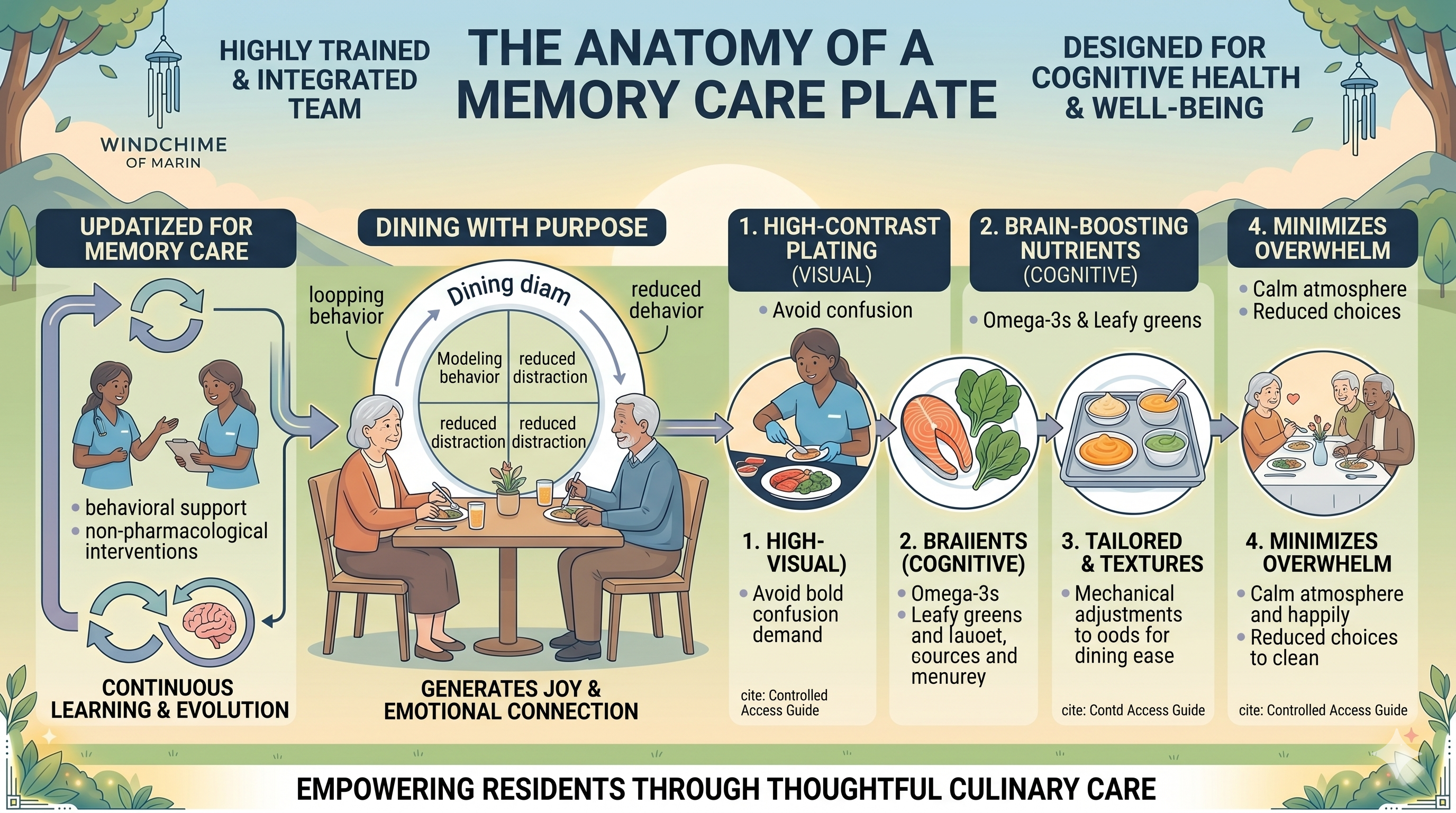
- Minimizing Sensory Clutter: People with dementia are highly susceptible to sensory overload. To combat this, the dining rooms at Windchime of Marin are intentionally designed to be calm. We use soft, glare-free lighting and keep the table settings clean and uncluttered. You will not find busy floral centerpieces or an excess of condiment bottles that can confuse a resident or distract them from their meal. The focus remains entirely on the high-contrast plate in front of them and the warm faces of their dining companions.
- A Focus on Social Connection: Dining is inherently a social activity. For our residents, mealtime is a crucial opportunity for engagement and connection. Caregivers dine alongside the residents, modeling eating behaviors and guiding light conversation. We also warmly welcome families and friends to join their loved ones for meals, creating a shared experience that strengthens bonds, just as we do during our cherished Holiday Luncheons.
- A Comfortable, Home-Like Atmosphere: The transition to memory care is easier when the environment feels like a home, not a hospital. Our dining room is designed to feel like a comfortable, residential space where residents can enjoy a rich variety of freshly prepared meals. This sense of familiarity is incredibly soothing for individuals experiencing cognitive decline
The Marin County Influence
Our approach to a comforting dining environment is deeply influenced by our location. Windchime of Marin has provided boutique-style memory care in Kentfield for over 20 years. We bring the relaxed, welcoming spirit of Marin County into our dining rooms.
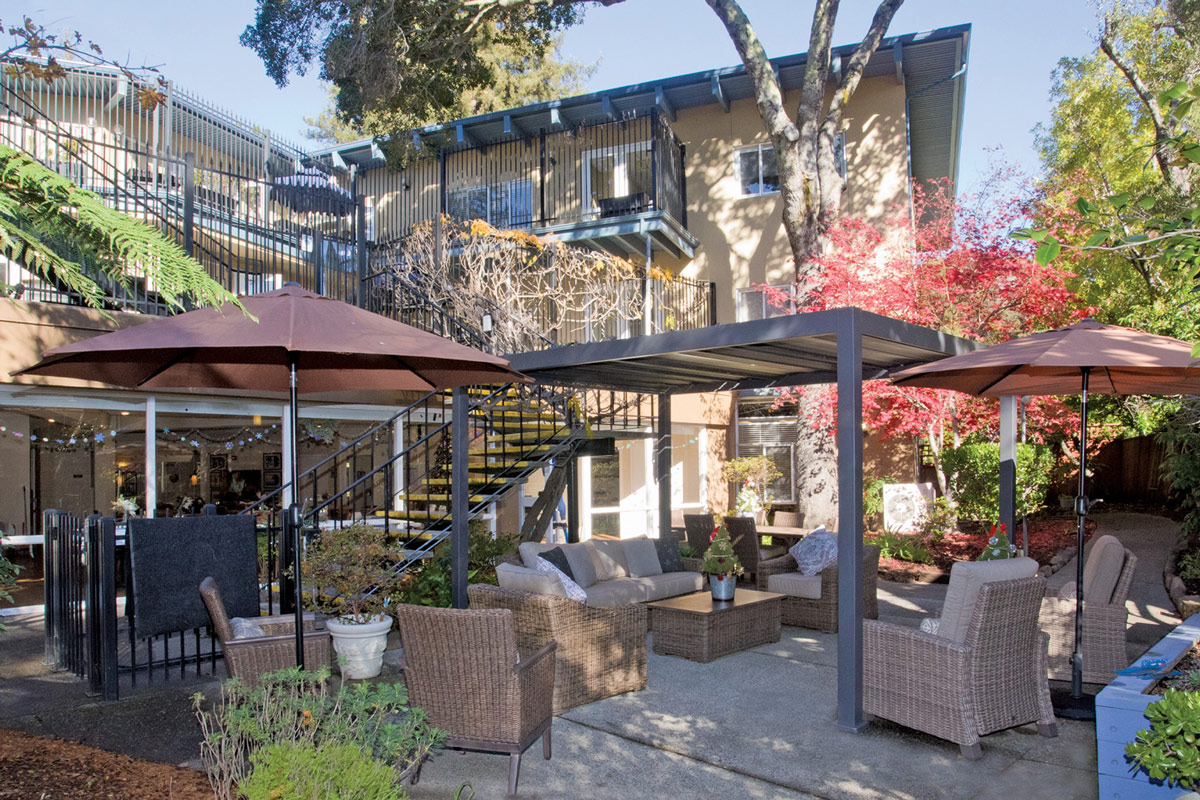
The large windows in our dining areas often look out onto our secure, landscaped outdoor spaces, allowing residents to enjoy the natural beauty of the area while they eat. Whether they are enjoying a homestyle favorite or a California-fresh dish prepared by our Elevate Dining® culinary team, the atmosphere is designed to feel like a relaxed, sunny afternoon in the Bay Area. We even encourage families to take their loved ones out for meals to nearby Kentfield favorites like Tony Tutto Pizza or Crown and Crumpet Cafe when appropriate, extending the joyful dining experience beyond our walls.
By combining the culinary excellence of the Elevate Dining® program with a deeply compassionate, flexible, and supportive environment, Windchime of Marin ensures that mealtime remains a cornerstone of joy, health, and dignity for every resident.
Frequently Asked Questions (FAQs)
What does "flexible dining" actually mean for my loved one?
Flexible dining means we do not force residents to eat during a strict 30-minute window. We offer extended, convenient dining hours. If your loved one prefers a late breakfast or an early dinner, our culinary team and caregivers accommodate those natural rhythms to ensure they are eating when they are actually hungry and calm.
How do caregivers assist residents who struggle to eat?
Our staff provides gentle encouragement and hands-on assistance during meals. This can range from verbal cues ("Take a bite of your chicken, it's delicious") to modeling how to hold a fork, to discreet, physical help guiding the food to their mouth, always ensuring proper nutrition and hydration while protecting their dignity.
Why are the dining tables kept so bare?
We intentionally minimize table clutter. Excessive items like large centerpieces, multiple glasses, or crowded condiment caddies can cause visual confusion and sensory overload for a person with dementia. A clean, simple table setting helps them focus on the food in front of them.
Is the dining room loud and busy?
No. We actively manage the sensory environment. Our dining rooms are designed to be warm and comfortable, avoiding the loud, echoing acoustics or rushed "cafeteria" feel that can cause agitation in memory care residents.
Can family members join residents for a meal in the dining room?
Yes, absolutely. We believe dining is a vital time for connection. Families are warmly welcomed to join residents for meals, including special events like our Holiday Luncheons, which are designed to create shared experiences that strengthen bonds.
Do residents sit in the same spot every day?
While we do not enforce strict assigned seating, residents with dementia often find great comfort in routine and familiar faces. Caregivers expertly guide residents to seats where they have established positive social connections, fostering a sense of friendship and community.