Structured Daily Routines
SUMMARY
At Windchime of Marin, our Structured Daily Routines provide a vital "scaffolding of safety" that transforms an unpredictable world into a comforting, manageable environment for our memory care residents. By aligning purposeful activities with natural circadian rhythms, we significantly reduce anxiety, minimize late-afternoon "sundowning," and empower residents to experience daily moments of success, joy, and meaningful connection.
The Scaffolding of Safety:
Structured Daily Routines at Windchime of Marin When navigating the complexities of Alzheimer’s disease and other forms of dementia, the concept of time often becomes fluid and disorienting. In environments lacking structure, the transition from one part of the day to the next can feel jarring, leaving a person with dementia feeling lost, anxious, and constantly on high alert.
At Windchime of Marin, our exclusive memory care community nestled in the peaceful town of Kentfield, California, we do not view routines as a rigid schedule of chores. Instead, we implement "Structured Daily Routines" as a therapeutic scaffolding. This intentional predictability shifts the burden of remembering what comes next from the resident to the environment, allowing them to relax and thrive.
Aligning with Natural Rhythms Dementia frequently disrupts the brain's natural circadian rhythms, leading to fragmented sleep and daytime fatigue. Our Life Enrichment coordinators design the flow of the day to gently guide residents through an optimal energy arc.
The Gentle Start:
We reject the institutional practice of rushing residents through morning routines. Instead, mornings at Windchime begin with gentle sensory cues—the aroma of brewing coffee, soft lighting, and calming music. Following breakfast, we gather for "Circles of Connection." This light, social orientation helps ground residents in the present moment by discussing the weather, the date, and gentle current events.
Peak Engagement:
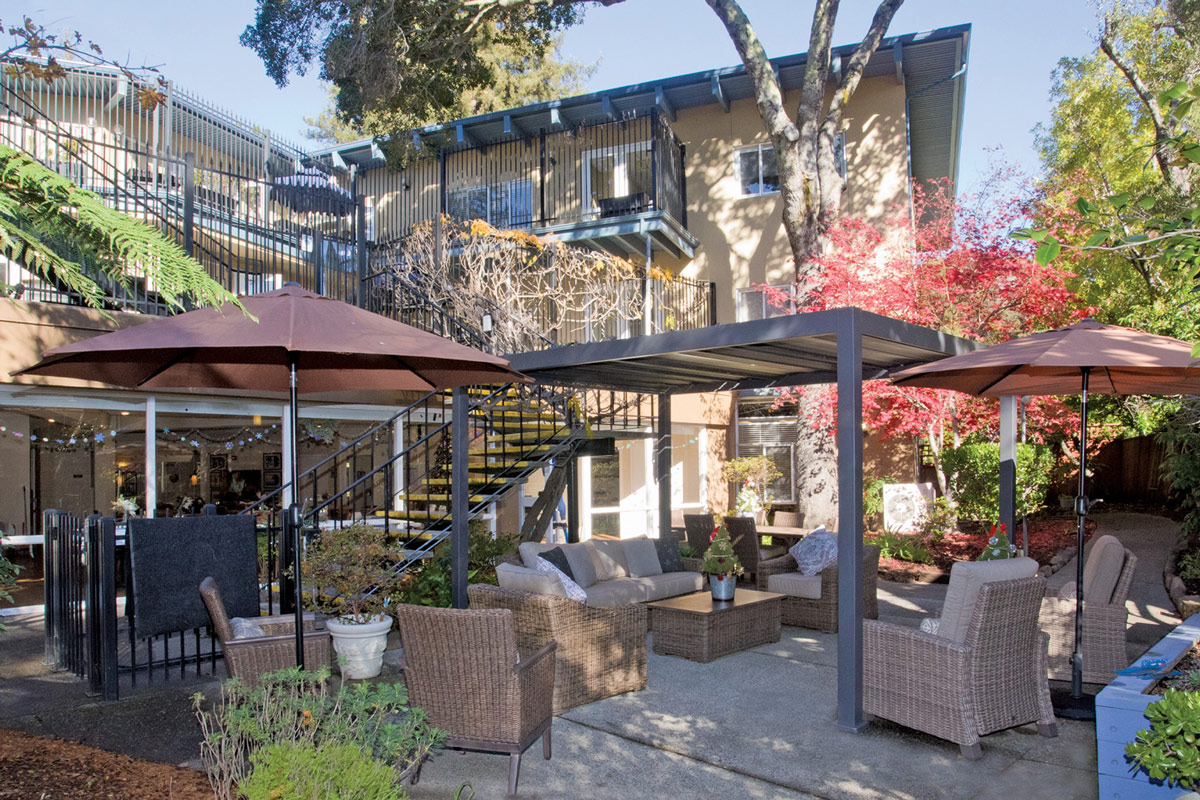
Mid-morning to early afternoon is typically when cognitive energy is highest. During this window, we introduce our most stimulating therapeutic activities. This might include interactive art sessions, music therapy, or physical movement programs like seated yoga or gardening in our secure courtyard. Capitalizing on these high-energy periods ensures residents remain physically active and mentally engaged.
Preventing Sundowning Through Purposeful Flow
One of the most challenging aspects of dementia is "sundowning"—a phenomenon where confusion, agitation, and anxiety spike in the late afternoon and early evening. Our daily structure is meticulously designed to preempt and de-escalate this agitation.
As the afternoon progresses, the energy of the community intentionally shifts. We transition from high-stimulation activities to calming, soothing engagements. Quiet Flow: This is when we might utilize our Media and Entertainment Room for relaxing nature documentaries, or offer hand massages with lavender oil. Hydration and Social Anchors: A scheduled "Tea and Cookies" time serves as a comforting social anchor. It also ensures critical late-day hydration, as dehydration is a primary trigger for sudden behavioral changes and delirium.
Life Skills and the Power of Purpose Structure at Windchime also incorporates individualized "Life Skills" stations. While short-term memory may fade, long-term procedural memory—the "muscle memory" of lifelong habits—often remains strong.
A resident who took pride in running a household might find deep comfort in a structured afternoon routine of folding warm towels or arranging flowers. A former executive might find peace in sorting papers or organizing a workspace. These are not mere distractions; they are rhythmic, purposeful rituals that provide a profound sense of agency, mastery, and self-worth. By weaving these familiar tasks into the daily structure, we ensure that every resident experiences a day filled with dignity and recognizable meaning.
Frequently Asked Questions (FAQs)
Is the daily routine a strict, mandatory schedule? No. We utilize a "community rhythm" as a baseline, but the routine is an invitation, never a mandate. If a resident is having a difficult morning and needs more time to rest, we adjust their Individualized Service Plan (ISP) accordingly.
How does a structured routine help with anxiety? Dementia erodes executive function—the ability to plan and transition between tasks. Without structure, every event is a surprise, which spikes cortisol and anxiety. A predictable routine provides a comforting "scaffolding" so residents feel secure knowing what to expect.
What is "sundowning" and how does the routine help? Sundowning is a period of increased agitation that often occurs in the late afternoon. Our routine combats this by scheduling high-energy activities early in the day and purposefully transitioning to low-stimulation, calming activities (like tea time or gentle music) right before the late afternoon hours.
What are Life Skills stations? Life Skills are failure-free, familiar activities based on a resident's past profession or hobbies (e.g., folding linens, tinkering with safe hardware, sorting). Integrating these into the daily flow taps into preserved procedural memory and provides a sense of purpose.
Does the daily routine improve sleep? Yes. By aligning stimulating activities with the daytime and ensuring adequate physical movement, we help reset the body's circadian rhythm. This promotes better "sleep hygiene," leading to more restful, uninterrupted sleep at night.
Where is Windchime of Marin located? Our secure, boutique memory care community is located in the scenic and peaceful town of Kentfield, right in the heart of Marin County, California.
Citations:
- Alzheimer's Association: Behaviors and Sleep: Establishing Predictable Daily Routines.
- National Institute on Aging (NIA): Alzheimer's Caregiving: Coping with Sundowning and Wandering Through Structure.
- American Psychological Association: The Impact of Procedural Memory and Life Skills Activities on Dignity in Dementia Care.
PDF Download: Structured Daily Routines